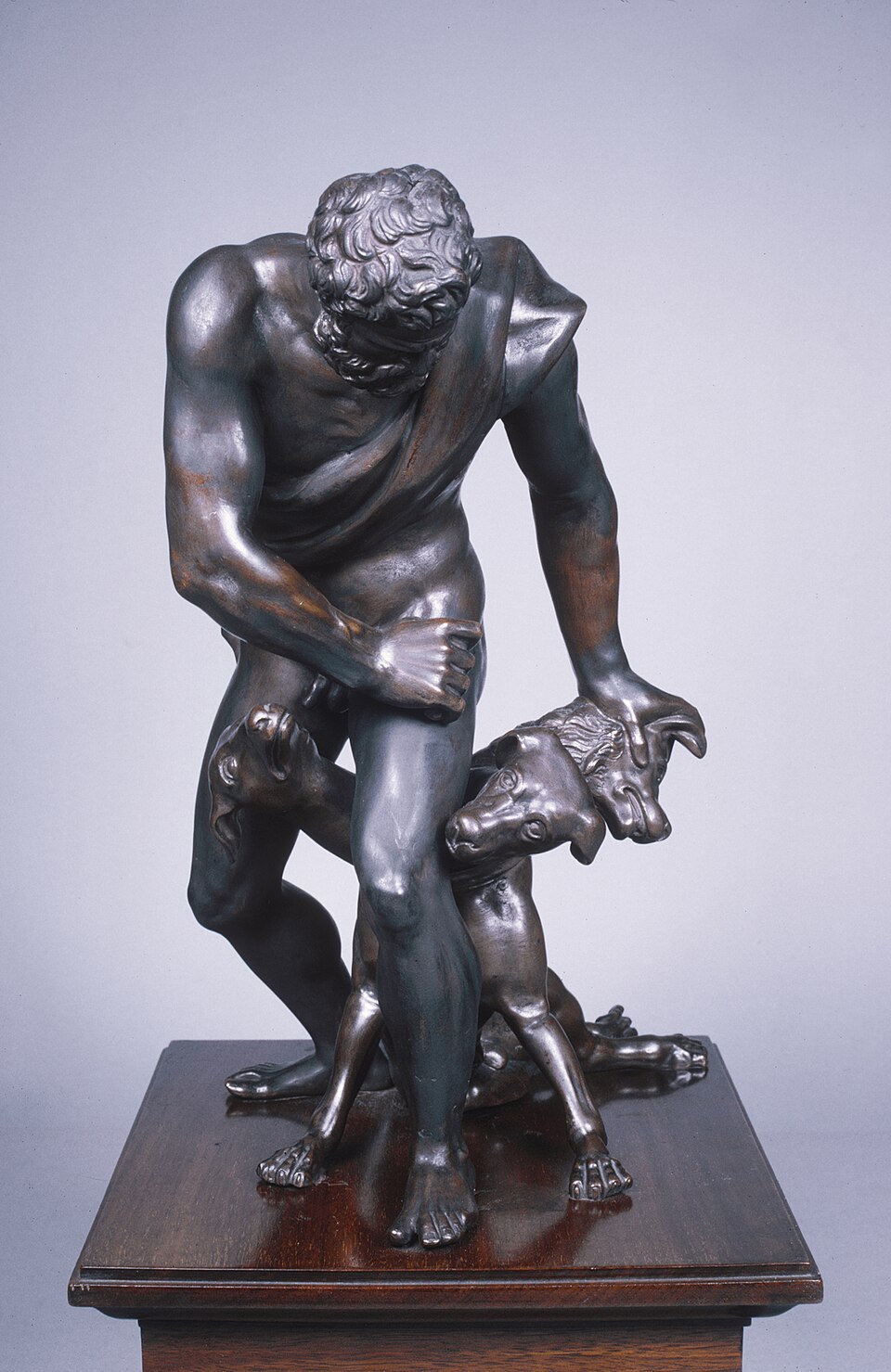
Cerberus's Power Ritual
The Three-Headed Guardian, Keeper of the Underworld Gates, He Who Knows the Passage of Souls
Learn more… Fehux10
 Sowilox10
 Kenazx10
The people of the Temple of Zeus, whom you have chosen, sing praise to you.
Listen to us, Reverend One,
Always in eager friendship and respect.
We, Zeus's Disciples, call upon you to aid and guide us constantly!
 Perthrox10
 Mannazx10Sowilox10
You come from the Underworld where the souls of the Pious ones reside.
Large is your Glory, Greater is your Crown.
 Laguzx10Fehux10
 Eihwazx10
Unknown are your ways.
Lead us to understand the hidden paths,
We partakers in your thrice great ways, Great Neberius!
O, Cerberus, chosen One by Zeus Himself to Guard the Underworld!
 Tiwazx10Sowilox10
 Raidhox10
The people say, "Great is the Power of Neberius, Who Guards all Riches."
You Guard the Flaming Path and the Path of the Waters of Restoration.
By your admission move the terrible and glorious creatures of your domain,
Through your gaze of Wisdom, you know who will set sail for left and right!
Eihwazx10Laguzx10 Dagazx10
Damned are those who try to trespass,
Blessed are those who listen to the wise ones for safe passage.
The Herculean souls will pass, but no fool shall ever pass by you unnoticed.
You are ever vigilant. You cannot be surmounted by force, Great Kerberus!
 Berkanox10Sowilox10Raidhox10
Your service is good for the children of the Gods: the followers of the Temple of Zeus, the Family of Zeus.
Pure are your acts, our beloved, Great, and Esteemed Neberius!
You Guard the great riches and bestow them on the pious ones,
The laborious, the great, the heroic ones!
Blessed are we all to bless you by our Rituals, Great Guardian.
We, your followers in the Gods, receive all your abundant blessings.
Neberius, Neberion, Kerberus, Kerveros, Three-Headed Guardian; these are some of your Names and Titles.
Blessed are All your Names, now and in all eternity!
After you are done with this, you can meditate on Neberius's Sigil in the Temple of Zeus, or the one below. Let yourself be immersed and receive energy from Neberius.
It's important to meditate on yourself after the Ritual calmly for a few minutes.
SAT
सत्: SAT, real, true, truthful in Sanskrit.
The Shen Ring
The Symbol that Encapsulates the Sigil: The Shen Ring, Egyptian Hieroglyphic language. The Shen also survived in Chinese tradition as a glyph for Spiritual Force, Divine Force, and God.
Letters of the Sigil
The Ancient Greek letters for Neberius's Name in arrangement.
On Cerberus
Cerberus (Greek: Κέρβερος) is the three-headed hound who guards the gates of the Underworld, preventing the dead from leaving and the living from entering without divine sanction. In the Theogony (310-312), Hesiod calls him the "brazen-voiced hound of Hades, fifty-headed" (later traditions settled on three). His parentage is Typhon and Echidna. The three heads have been interpreted as past, present, and future, or as the three states of existence. Only Heracles, Orpheus, and Psyche (among mortals and heroes) passed him and returned. The name Κέρβερος may derive from Proto-Indo-European *ḱerberos ("spotted"), cognate with Sanskrit Śarvarī (a name for the night).
(Sources: Hesiod, Theogony 310-312; Homer, Iliad VIII.368, Odyssey XI.623; Apollodorus, Bibliotheca II.5.12; Lincoln, Death, War, and Sacrifice, 1991)
On Naberius (Goetic #24)
The Goetia lists Naberius (also Cerberus, Nebiros) as the 24th spirit: a Marquis commanding 19 legions, appearing as a black crane or raven. His attributed powers (teaching arts, sciences, and rhetoric; restoring lost dignities) correspond to Cerberus's role as the keeper of all knowledge that passes through the Gates: every soul that descends carries its wisdom with it, and the Guardian receives it all. The Goetia's own notation of "Cerberus" as an alias makes this one of the clearest cases where the demonological tradition preserved the original identity within its own pages.
(Sources: Weyer, Pseudomonarchia Daemonum, 1577; Ars Goetia, 17th c.; Scot, The Discoverie of Witchcraft, 1584)